

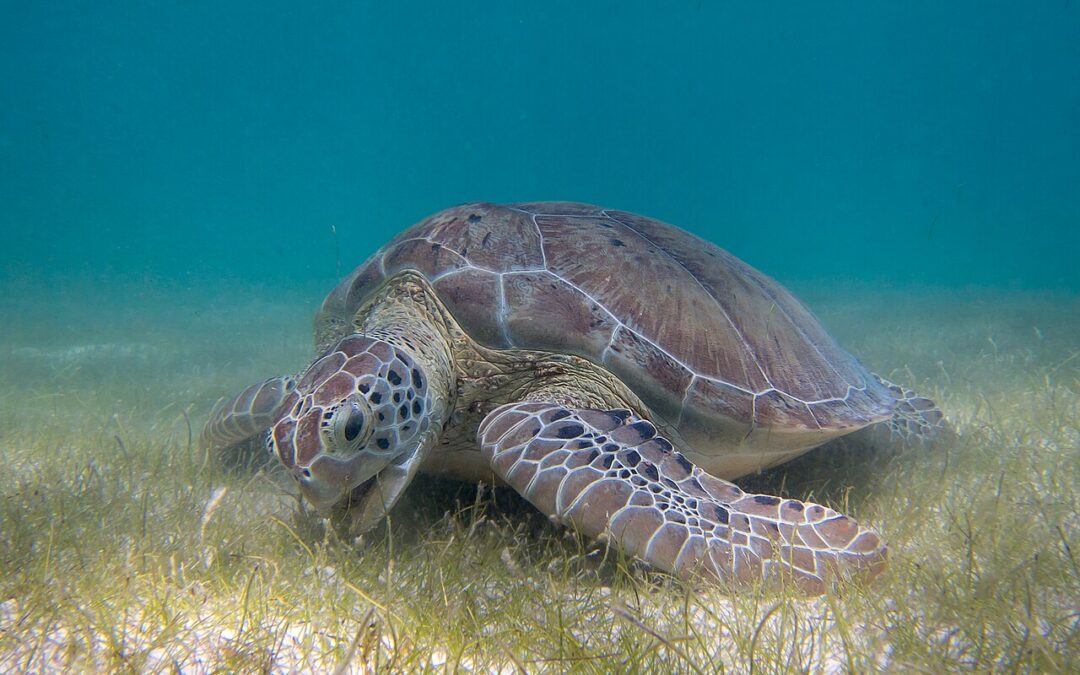
Photo: P. Lindgren / Wikimedia Commons, CC BY-SA 3.0. Akumal, May 2013. Resized and cropped; this version uses the same license.
Akumal’s seagrass is part of the reason green sea turtles feed in the bay. Those underwater meadows are living habitat, so protecting the plants matters just as much as giving the turtles space. For a snorkeling visit, the useful question is not simply where you might see an animal. It is how to observe a feeding ground without interrupting what happens there.
This guide connects the ecology beneath you with a few practical decisions before a private excursion: what to look for, why the guided route matters, and what to confirm before entering the water. Wildlife sightings and visibility are never guaranteed.
Featured photo: a green sea turtle grazing in Akumal Bay, photographed May 10, 2013, by P. Lindgren, via Wikimedia Commons, CC BY-SA 3.0. Resized and cropped for display; this image version remains under the same license. This historical photograph does not show current conditions or a Nah Experience departure.
What is growing beneath the turtles?
Seagrasses are flowering plants adapted to life underwater. They have leaves, roots and underground stems called rhizomes. As NOAA’s seagrass overview explains, their meadows provide food and shelter for marine life. They are different from loose seaweed drifting through the water.
Akumal’s official protection program identifies three seagrasses: turtle grass (Thalassia testudinum), manatee grass (Syringodium filiforme) and Halodule wrightii. You do not need to identify each blade to appreciate the meadow. A patch that looks like a plain underwater lawn can be an important feeding area.
According to NOAA Fisheries’ green turtle profile, green turtles eat mainly seagrasses and algae, although their diets can include animal matter. When a turtle lowers its head toward the vegetation, you may be watching it forage. Watch from the distance indicated by your guide rather than moving closer for a feeding photograph.
Why a short or uneven meadow is not the whole story
Grazing changes the plants, and different plants respond differently. Research in Akumal shows a more complicated relationship than “more turtles means a healthier meadow.” A 2020 experimental study in Ecosystems found that hard, branched coralline algae could discourage turtle grazing and help seagrass recover in previously overgrazed patches.
A 2024 follow-up study emphasized that this relationship depends on conditions, including grazing pressure and the growth of the algae. That is a reason to leave the seabed alone. Moving vegetation or clearing a patch for a better picture can interfere with relationships that are not obvious from the surface.
These studies describe particular observations and experiments. They are not a live assessment of every part of Akumal today. Avoid diagnosing a patch as healthy or damaged from its height alone, and do not expect a guide to identify every organism while supervising the group.
A simple way to picture your place in the habitat
The aim is to watch without making an animal change direction for you. Akumal’s Centro Ecológico Akumal has documented research on turtle behavior around snorkelers, including tourists’ presence and actions. A turtle that stays in view is not an invitation to surround it.
Turn that understanding into better snorkeling habits
Get comfortable before focusing on wildlife
Ask the guide to check your equipment and explain how to signal for help. A leaking mask can quickly become more distracting than the scenery. Tell the team about swimming confidence before booking, and ask where adjustments can be made without putting your feet on the meadow.
Follow the route even when a turtle leaves it
The official Akumal protection program establishes guided observation circuits and protected areas for turtles and seagrass. It also prohibits touching, feeding, chasing or disturbing wildlife and damaging the seagrasses. A turtle can move beyond the area where visitors are allowed to swim; its movement does not open a new route for your group.
Make the photograph fit the encounter
Keep your camera close to you and accept the view available from your permitted position. Do not reach toward a turtle, trail equipment across the bottom or ask someone to move vegetation. If getting the shot requires leaving the guide or closing the distance, let that photograph go.
What to confirm on a private Tulum and Akumal tour
Nah Experience’s private Tulum and Akumal tour combines Tulum’s ruins, a cenote, a local meal and guided snorkeling. The ground transportation and English-speaking guide are arranged for your booking group. Akumal’s natural areas remain subject to their own access and conservation requirements.
Before reserving, ask these specific questions:
- Who leads the water activity? Confirm the authorized snorkeling arrangements and who gives the briefing in English.
- What equipment and participation requirements apply? Check fit, swimming expectations and the current instructions for your group. Do not rely on equipment advice from an older travel post.
- How much of the day is snorkeling? The whole excursion also includes travel and other visits. Ask for the planned water portion rather than treating the full-day duration as swim time.
- What happens if someone stays out of the water? Agree on the arrangements in advance, including supervision where needed.
Bring a sun shirt and follow the instructions for products used before entering the water. Our day-tour packing guide covers the rest of the mixed land-and-water day. If you are still choosing the kind of outing you want, compare the itinerary in our Akumal vs. Cozumel snorkeling guide.
Questions travelers ask about Akumal seagrass
Is seagrass the same as sargassum?
No. Seagrass is a flowering plant rooted in the seabed; sargassum is a type of algae. A forecast or photograph of floating seaweed does not tell you the condition of the rooted meadow. Ask about the actual water conditions and operating arrangements for your date.
Does a private tour let us swim anywhere?
No. Private transportation and guiding do not remove the bay’s protected areas or authorized-route requirements. Confirm the water activity separately from the rest of the private package.
Does healthy seagrass guarantee a turtle sighting?
No. Habitat helps explain why turtles use the bay, but an excursion is still a wildlife observation activity. Animal movements, visibility and operating conditions can change what you see.
Plan a visit built around observation
If a ruins-and-snorkeling day fits your trip, review the current Tulum and Akumal itinerary and ask about your date. Send your accommodation and group size, and describe swimming preferences or anyone who wants to skip the water activity. Ask for the confirmed total in USD and the arrangements that apply to your group before booking.
Sources reviewed October 16, 2026. This is a research-based habitat guide, not an on-site conditions report. The day’s briefing, local restrictions and operating decisions take precedence over general planning information.